What is AI?
AI stands for Artificial Intelligence, which enables humans to analyze large amounts of patients' data, which would otherwise not be possible to measure practically. AI tools will be useful in detecting and treating liver diseases early in the future. Today, liver disease is a major global health concern, causing about two million deaths every year and contributing to 4% of all deaths worldwide.
What Types of Liver Diseases can be Detected Through AI?
Liver diseases are characterized by their complexity and diversity, and include a wide range of conditions, such as:
- Viral hepatitis,
- Those related to metabolic dysfunction,
- Steatotic liver disease,
- Cirrhosis,
- Hepatocellular carcinoma.
As you know, chronic liver diseases and cirrhosis cause an increasing number of deaths worldwide and significantly increase the risk of developing liver cancer. Today, AI technology is very useful especially for hepatology research and the evaluation and analysis of patient case studies.
Benefits of AI in Medical Science
AI in liver diseases is not only limited to improving diagnosis accuracy, but also extends to the following:
- Predicting disease progression,
- Assessing patient prognosis,
- Formulating personalized treatment plans.
How does AI Accurately Identify Liver Tumours and Fibrosis?
Significantly, AI can automatically identify signs of liver tumors and fibrosis by analyzing liver ultrasound images.This not only reduces doctors' workload but also improves the efficiency and consistency of diagnosis.
AI can Identify HCC at an Early Stage?
In a recent study, liver MRI images were analyzed using deep learning algorithms and successfully identified early-stage Hepatocellular Carcinoma (HCC) patients with significantly higher accuracy than traditional imaging assessments.
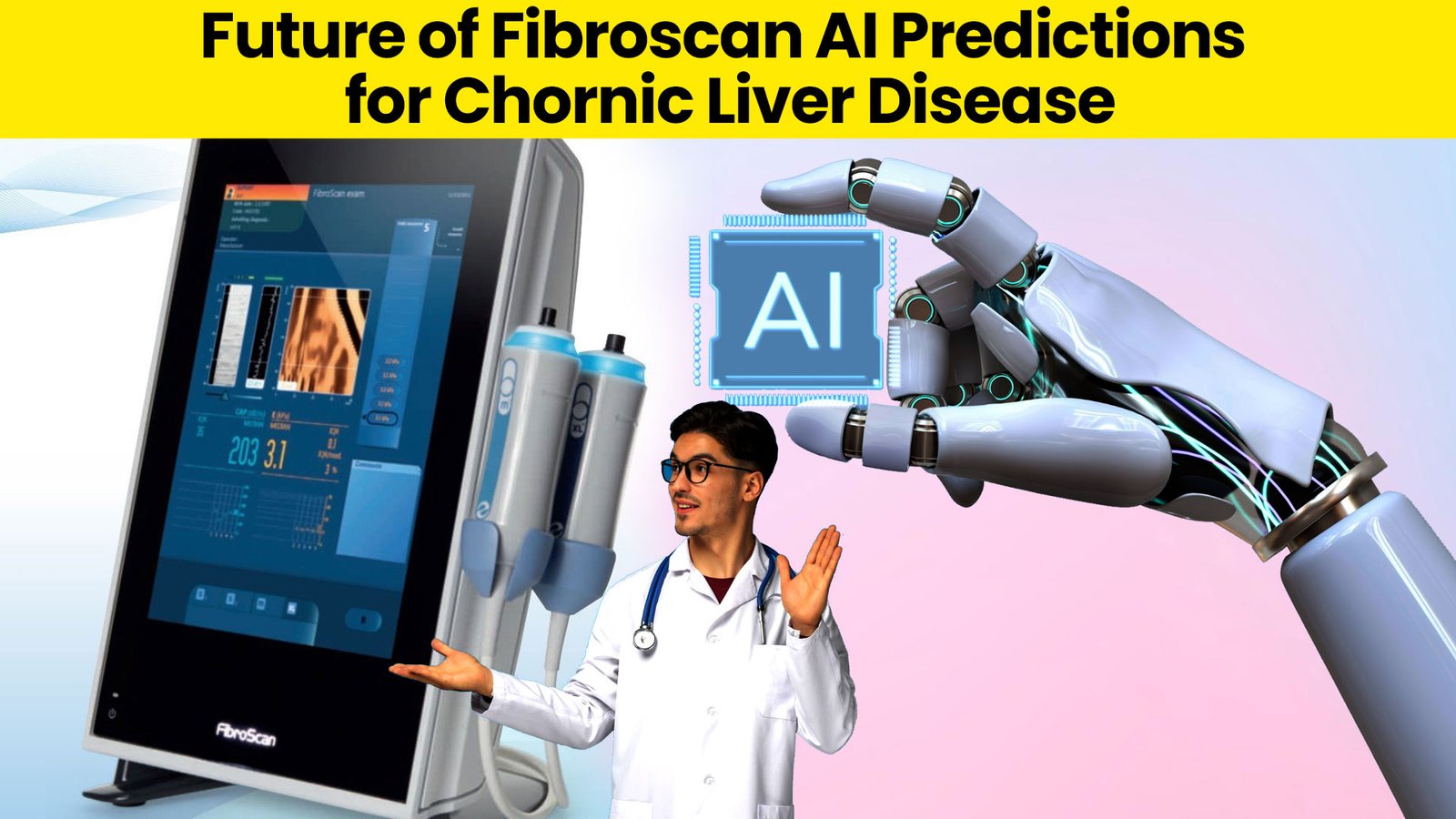
Why is AI-based Fibroscan Better than Traditional Fibroscan?Traditional fibroscan interpretation relies on established kPa values, but AI can identify subtle patterns and correlations that humans may overlook, making it possible to detect fibrosis earlier and more accurately.
What does AI Fibroscan Check in a Patient?
AI models can integrate fibroscan results with various ways like following:
- Patient demographics,
- Medical history,
- Blood test results, and
- Imaging data such as MRI or CT scans
However, from this result we got that AI helps in many ways to analyse and create a more comprehensive picture of the liver's health.
AI also Used in Biopsy Techniques
AI has been used in the development of liquid biopsy techniques. These techniques analyze deoxyribonucleic acid and exosomes circulating in the blood to identify HCC-related signals for early detection.
AI Based Treatment is Faster and More Efficient Diagnosis
AI can automate part of the analysis process, reducing the time taken to interpret fibroscan results and saving physicians' time.
AI can Reduce Doctors' Workload!
AI in liver imaging not only improves the accuracy of diagnosis but also reduces doctors' workload, which shows a promising clinical application prospect. It is certain that by 2030, your liver health journey will be guided by an invisible, intelligent companion called AI.
For more information, I wouold suggest please watch this video. In this video, we will discuss how AI based Fibroscan is better than traditional Fibroscan. Some of our viewers have suggested to make a video on this. I think everyone should know about the new technology of liver treatment. Please watch this video till the end.